You’re on the verge of making a significant move – applying for a dream job, starting a creative project, or even just initiating a difficult conversation. Then, the whispers start.
“But what if I’m not qualified enough?”
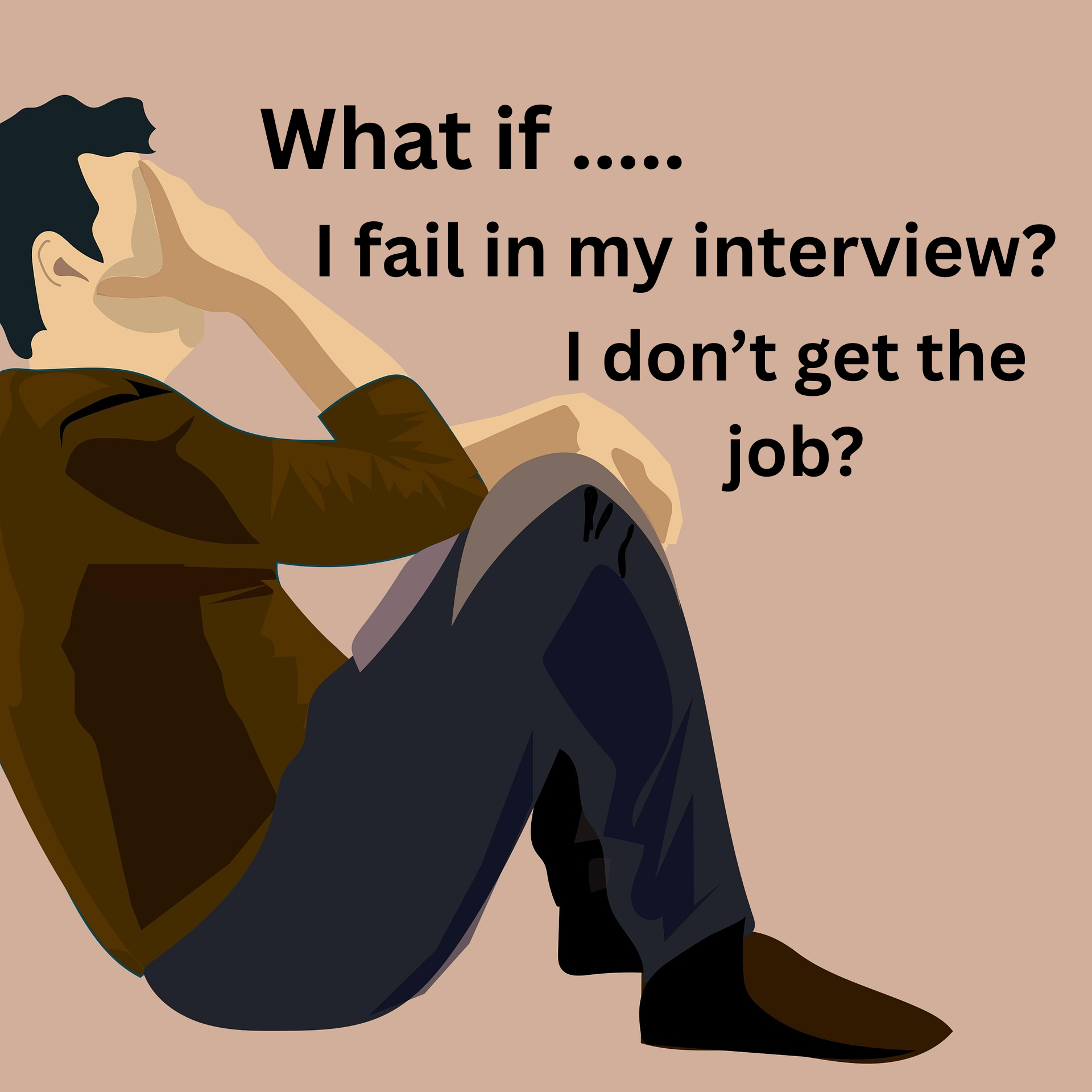
“What if I fail? I’ll look like a fool.”
“But what if the timing isn’t right?”
In the world of psychology and decision science, these “ifs” and “buts” are the building blocks of Analysis Paralysis. While a healthy degree of caution is a survival mechanism, letting these conjunctions dominate your internal monologue can effectively ruin your ability to move forward.
We mistake stillness for safety. In truth, the “if only” mindset is the most expensive luxury because it consumes the only currency you can’t earn back – which is time.
You may treat ‘what if’ like a safety net. However, in reality it is a spider’s web.
Make sure the “If/But” Distinction is clear:
“If” is a fear of the future
“But” is an excuse in the present.
Here is how the “ifs and buts” cycle erodes your decision-making:
1. The Mirage of Certainty
The primary reason we incline on “ifs” is our innate desire for certainty. We believe that if we can simulate every possible negative outcome, we can prevent them. However, this is a cognitive illusion.
When you say, “If X happens, then Y will go wrong,” you are treating a hypothetical future as a present reality. This creates a feedback loop of anxiety. Instead of weighing actual risks, you end up battling ghosts.
Decision-making requires a level of comfort with ambiguity; “ifs” are a desperate attempt to eliminate that ambiguity, usually resulting in total stagnation.
2. "But" as a Barrier to Growth
“But” acts as a conversation eraser.
- “I want to start a business, but I don’t have enough capital.”
- “I know I should leave this situation, but it’s complicated.”
The word “but” dismisses the preceding positive intention and highlights the obstacle as an immovable mountain. It shifts your focus from resourcefulness (how do I get the capital?) to restriction (I can’t do this). In essence, “buts” are the bricks we use to build walls around our comfort zones.
3. The Cognitive Load of Overthinking
Every “if” and “but” you entertain consumes “mental bandwidth.” Human beings have a finite amount of cognitive energy to spend each day – a concept known as Decision Fatigue.
When you spend hours contemplating on “What if they say no?” or “But I’ve never done this before,” you are draining the battery you need to actually execute the decision. By the time you have to choose, your brain is too exhausted to think clearly, often leading to “deciding by not deciding” – which is, in itself, a choice that usually yields the worst results.
4. Fear vs. Calculation
There is a profound difference between Calculated Risk and Fear-Based Hesitation.
- Calculated Risk: “If the market drops 10%, I have a buffer to survive.” (Proactive/Strategic)
- Fear-Based Hesitation: “But what if the market drops and I lose everything?” (Reactive/Emotional)
The “ifs and buts” habit forces us into a reactive state. It replaces objective data with emotional projections. This ruins decision-making because it prioritizes loss aversion -the tendency to prefer avoiding losses over acquiring equivalent gains – to an irrational degree.
How to Break the Cycle
To improve your decision-making, you don’t need to stop thinking; you need to change the structure of your thoughts.
- Replace “But” with “And”: Instead of saying “I want to go back to school, but it’s expensive,” try “I want to go back to school, and I need to find a way to finance it.” This simple linguistic shift turns a barrier into a problem to be solved.
- The 70% Rule: Borrow a page from Jeff Bezos’s playbook. Most decisions should probably be made with somewhere around 70% of the information you wish you had. If you wait for 90%, you’re likely to be a person who is too slow or takes no decision at all.
- Time-Box Your Rumination: Give yourself 15 minutes to list all the “ifs” and “buts.” Once the timer is up, you are no longer allowed to entertain hypotheticals. You must move to the “How” phase. This will allow you to be solution oriented and decide.
- Practice Micro-Decisions: Build your “decisive muscle” by making small choices quickly.
- Decide what to order from a restaurant in under 30 seconds.
- Choose what you will wear for an event instantly.
This trains your brain to trust its intuition over its anxieties.
In Essence:
“Ifs” and “buts” are comfortable. They keep you safe from failure, but they also keep you away from success. Live life in the “ands” and the “dos.”
The next time you feel an “If” or a “But” rising in your mind, recognize it for what it means, do not hesitate – just decide.
Remember – a “wrong” decision often teaches us more than no decision at all.
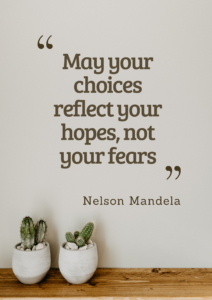
Your decisions should reflect your hopes rather than your fears, often requiring you to take bold action over perfection!
What is one decision you’ve been ‘butting’ away this week?
Challenge yourself to take a decision today!